
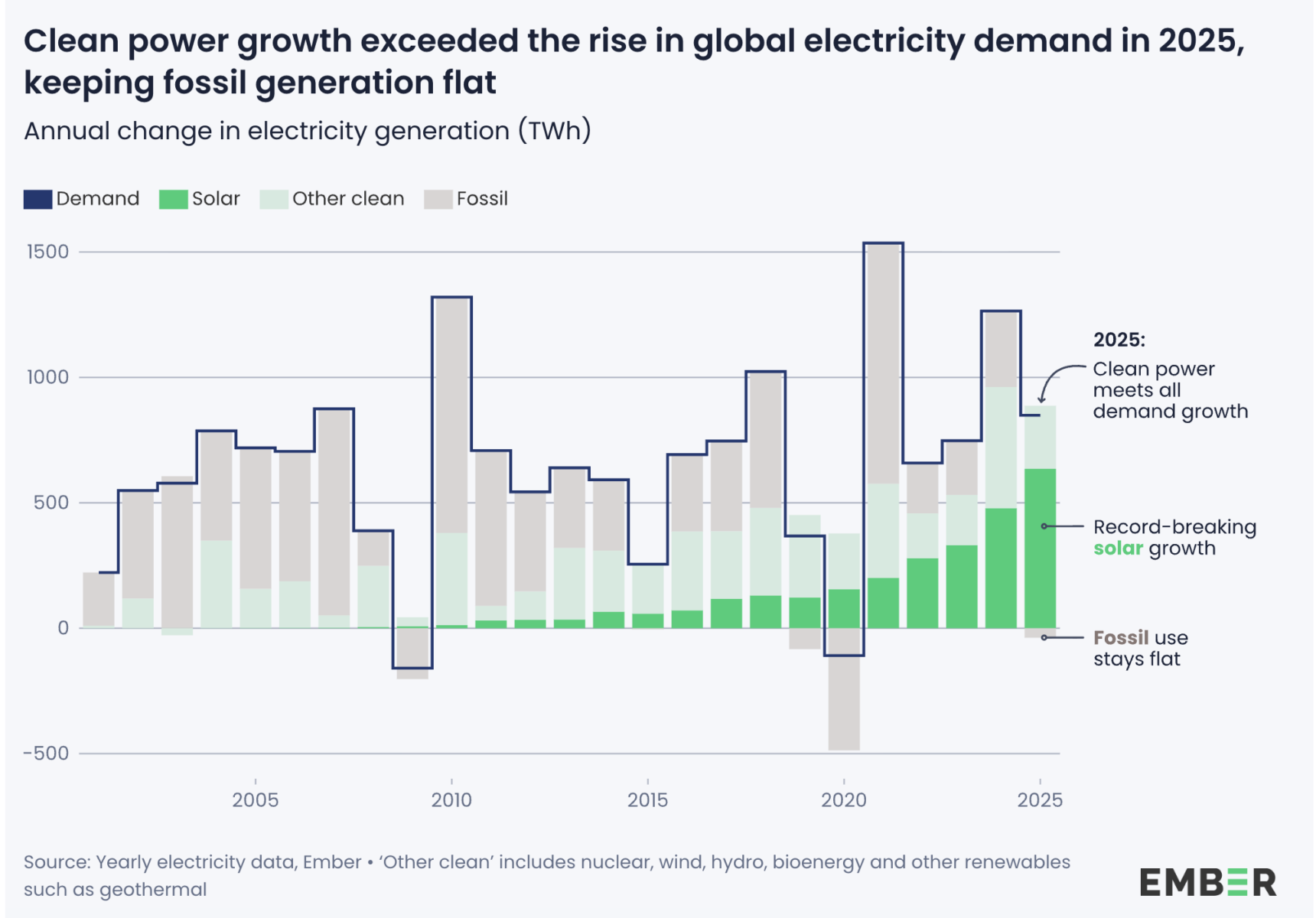
It’s pretty obvious to anyone paying attention that the future of energy will be a mix of solar, wind, geothermal, nuclear, and kinetic, paired with batteries. This will replace most carbon fuels.
This is not a political argument or an appeal to save the planet; rather, it is a simple economic argument based on cost.1
Renewables are cheaper to build than coal plants, face less local resistance than natural gas, and create far fewer environmental cleanups than oil. This will become an even bigger issue as the demand for power-hungry artificial intelligence and its data centers makes it less expensive to build them using renewables than with traditional power sources.
Last year, the US made $3.3 trillion in new energy investment; the surprising data point is that about two-thirds of that (~$2.2 trillion) went into clean energy investments. Globally, clean energy is dominating new power capacity. More than 90% of all new electricity capacity worldwide in recent years came from renewable sources.2
~~~
The biggest impact of the Iran War may not be that crude oil at $120 per barrel might tip the global economy into a recession; rather, it is more likely to drive even faster adoption of cheaper, greener energy sources.
When you see charts showing the cost of an energy source falling 99%, you have to assume it is being adopted broadly:
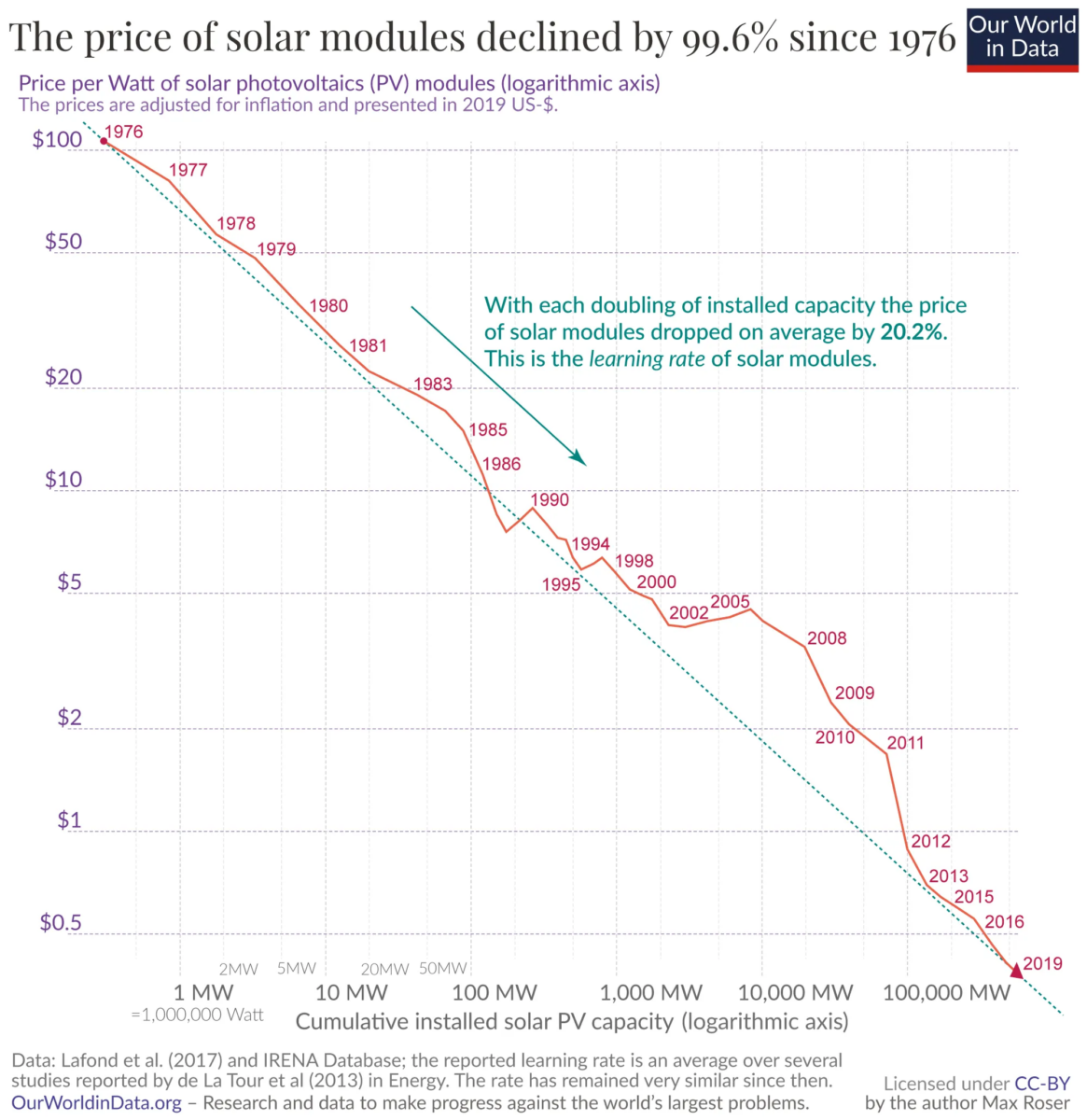
It’s not just solar; battery prices have also fallen by ~90% over the past decade.
I am not suggesting that natural gas or any (fossil fuels) will disappear anytime soon; it is most likely to be the transitional energy between oil and coal versus solar and wind.
Sources:
Global Electricity Review 2026
Ember, 21 Apr 2026
Learning curves: What does it mean for a technology to follow Wright’s Law?
By Max Roser
Our World in Data, April 18, 2023
__________
1. And that’s before we bring in 3rd-party externalities
2. In 2023, renewable energy sources made up over 30% of the world’s electricity, and that number is rising every year
