My back-to-work morning train WFH reads:
• Why It’s So Hard to Spot a Stock-Market Bubble: Bubbles are obvious only in the rearview. A timely WSJ reminder as the AI-trade froth keeps everyone guessing. (Wall Street Journal)
• Why Americans Hate the ‘Good’ Economy: The sentiment-versus-data gap, examined yet again. The numbers say one thing, the voters feel another, and the disconnect is becoming the story of the cycle. (Axios) see also The ‘Vibecession’ Is Over. The ‘Permacession’ Is Here.: The gap between the data and the mood hardens into something more permanent. A sharp framing of why good numbers aren’t lifting spirits. (The Atlantic)
• Prediction Market Philosophers Got What They Wanted. They’re Not Happy About It: Getting the future right is now big business. But at a festival in the Bay Area, forecasters worry that sports markets could take the whole industry down. (Wired)
• Is AI Good at Stock-Market Timing? A New Study Casts Doubt: Turns out the machines can’t time the market either. A healthy splash of cold water on the AI-alpha hype. Research finds that while large-language models may work well initially, they don’t outperform the market over long periods and in changing conditions (Wall Street Journal)
• AI Sales Start to Justify Data-Center Spending Boom, Report Says. The first real evidence that the capex binge is paying for itself: Revenue from artificial intelligence has reached a tipping point, showing that the hundreds of billions of dollars tech companies are spending on it may be economically sustainable, according to a report from research firm Exponential View. Global AI sales, excluding China, reached $25 billion in the Q1 2026, exceeding $21B estimates. (Bloomberg)
• Hollywood and Big Tech Are Preparing for War: Meta wants to steal TV viewers, Amazon and Apple are meddling with content, and traditional media companies are pursuing megadeals to try and survive. The studios and the platforms circle each other as AI scrambles the economics of content. The fight that will define the next decade of entertainment. (Hollywood Reporter)
• Inside the Onion’s quest to turn Infowars into a comedic revenge story: The satire mainstay has faced legal roadblocks in taking over Alex Jones’s conspiracy theory juggernaut. But it’s moving forward anyway. (Washington Post)
• The Invention of Antifa: The courts decree a new domestic terrorist: Lauren Fadiman traces how a loose tactic became a political bogeyman. A sharp, skeptical look at how labels get manufactured. The courts decree a new domestic terrorist (The Baffler)
• What It’s Like to See Your Nude Portrait Sell for $39 Million: Lucian Freud’s muse Sue Tilley talks about ‘Sleeping by the Lion Carpet,’ one of four of his paintings that features her unclothed (Wall Street Journal)
• The Big Lebowskization of California: Aging. Jobless. Drinking Canned White Russians and Smoking Pot. Golden State Residents Resemble the Dude. (Zócalo Public Square)
Video of the day: Why China Is Building the World’s First $2 Trillion Megacity
Be sure to check out our Masters in Business this past weekend with Carl Richards, a financial advisor who is also the creator of the Sketch Guy column, which ran weekly in New York Times for a decade. He hosts Behavior Gap Radio (1,300+ episodes) He co-hosts “Kitces & Carl — Real Talk for Real Financial Advisors” with Michael Kitces.” Richards latest book is Your Money: Reimagining Wealth in 101 Simple Sketches.”
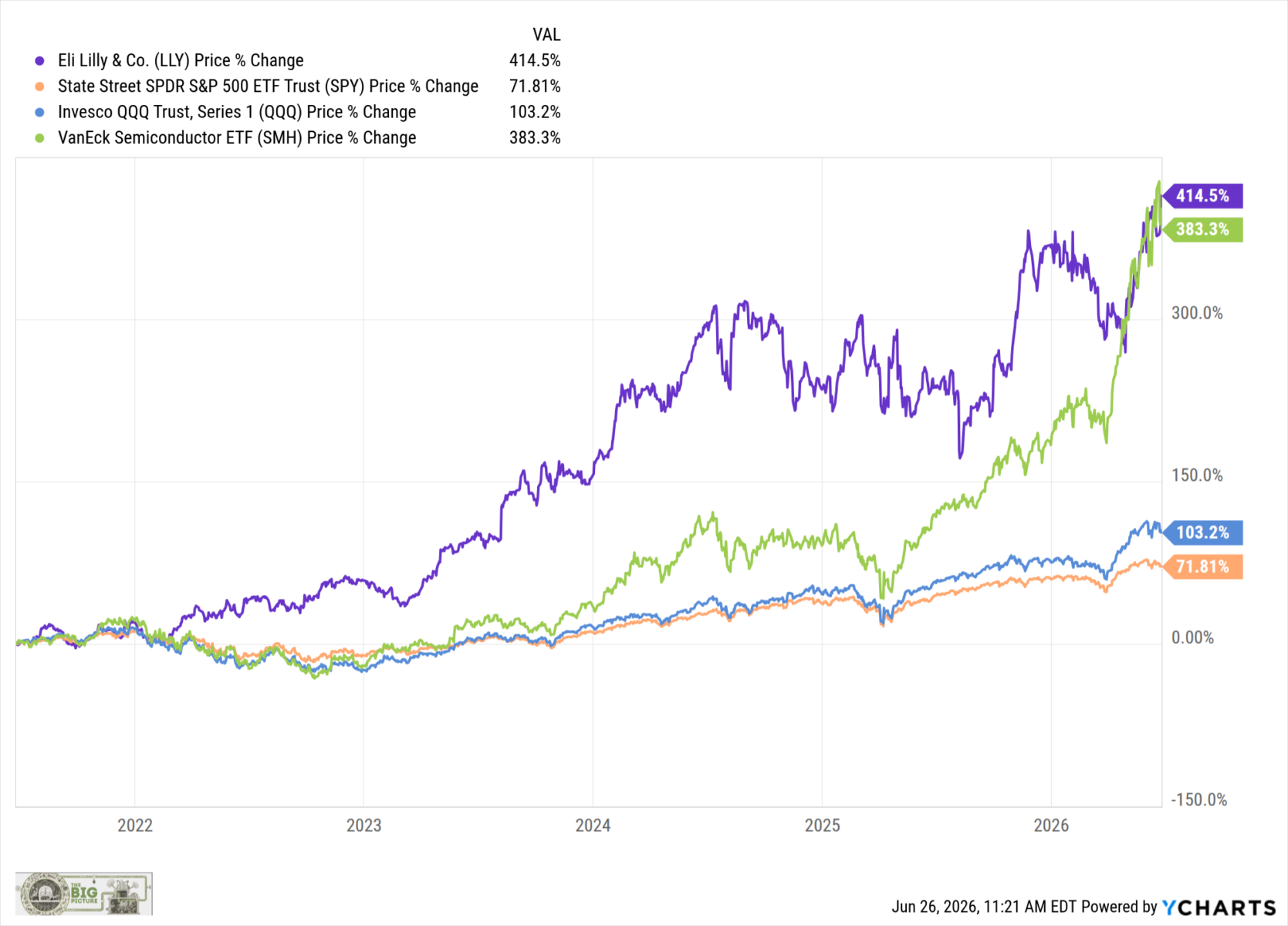
Eli Lilly & Co (LLY) Beats SPY, QQQ, and SMH Over 5 Years
Source: YCharts
Sign up for our reads-only mailing list here.
