
It’s late August, before a holiday weekend. You don’t need yet another analysis of POTUS’ attempt to fire Lisa Cook – there have been plenty already.
Instead, let’s get philosophical. I want to consider a different question: Why Aren’t Markets Freaking Out? Paul Krugman raised that question today, and while I don’t disagree with his view, my framing is very different.
Let’s start with Benjamin Graham’s famous aphorism that “In the short run, the market is a voting machine, but in the long run, it is a weighing machine.” I would annotate1 Graham’s aphorism as follows:
Markets are probability machines.
Sure, people “vote” with their dollars, but that’s a tautology, a definition that lacks any useful context for understanding the market right now.
Here is a more useful framework:
1. The future is inherently unknown (aka “Nobody knows anything”)
2. Investors express their expectations via their capital
3. Collectively, this forms a market consensus.
Let’s flesh this out a little more:
Nobody knows anything means that none of us know, with any degree of certainty, how any of the current issues will eventually resolve. Cook’s (alleged) firing, tariffs2, inflation, corporate earnings, whatever. We can analyze, estimate, extrapolate, and hypothesize, but we simply don’t know precisely what the outcome will be – yet.
But we can (and do) express our individual views by allocating our capital. We form a perspective, imagine a possible future outcome, perhaps identify relative asymmetries. We make a risk/reward analysis and then put our cash to work. The short-term votes Graham was referring to were those dollar investments. Collectively,this is how a market consensus is formed. Sometimes, the highest probability outcome turns out to be right – all-time highs keep going higher! And other times, the highest probability outcome is wrong – Lower yields! Recession! Fed cuts!
Before we know the market outcome of any issue, we have only an array of probabilities, collectively determined, as to what might happen.
~~~
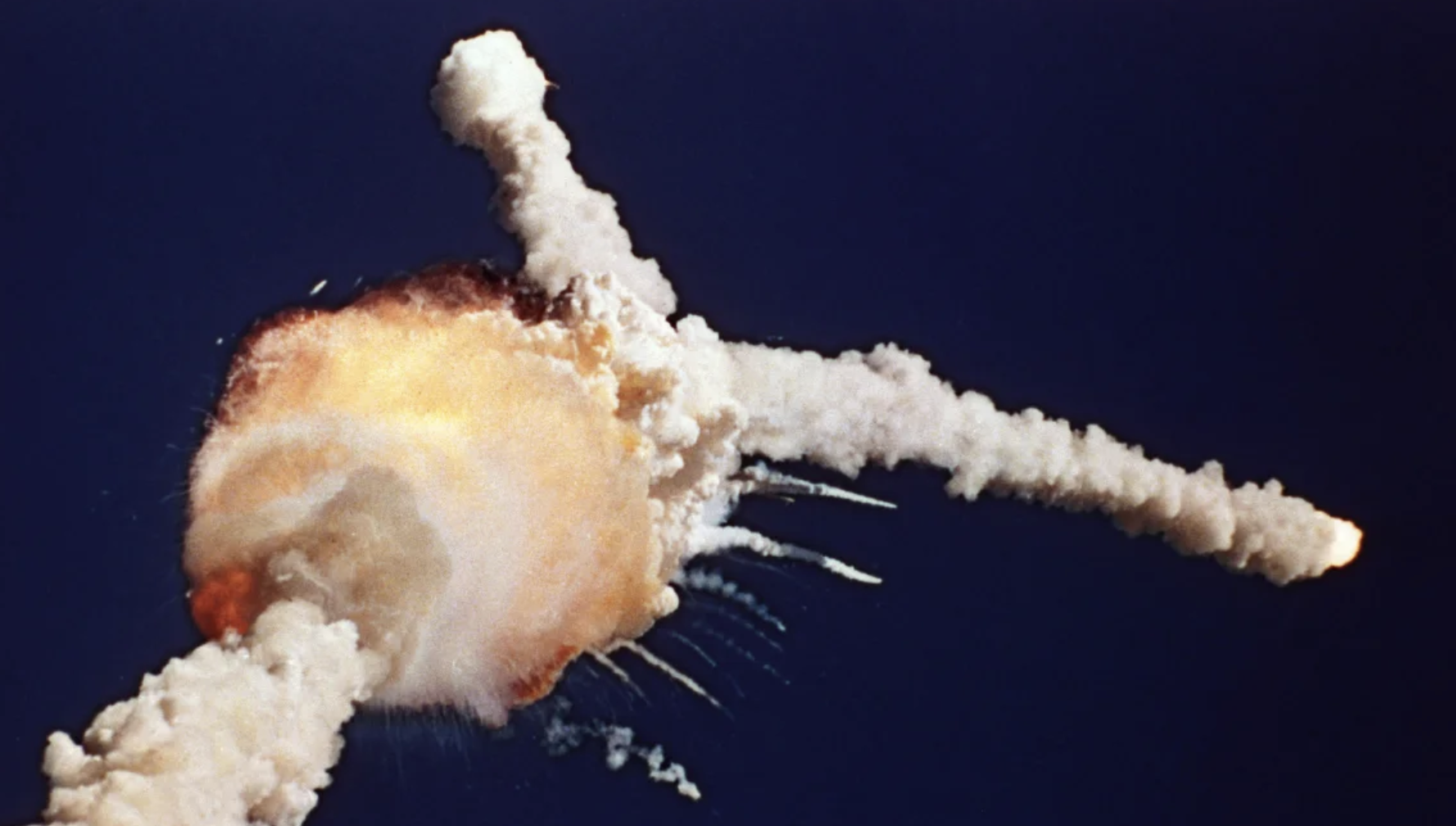
Consider an excerpt from James Surowiecki’s “The Wisdom of Crowds.” It discusses the January 28, 1986, Challenger space shuttle disaster. Here is the part I am most intrigued by:
“Within minutes, investors started dumping the stocks of the four major contractors who had participated in the Challenger launch: Rockwell International, which built the shuttle and its main engines; Lockheed, which managed ground support; Martin Marietta, which manufactured the ship’s external fuel tank; and Morton Thiokol, which built the solid-fuel booster rocket.”
At the end of that day (1/28/86), the first three stocks were off only 3%, but Morton Thiokol’s stock closed down 12%. People have interpreted this as a “Wisdom of Crowds” phenomenon; some claim this as proof that traders had somehow deduced that the catastrophe was Morton Thiokol’s fault; or that markets figured out that their booster rocket O-rings were ultimately to blame for the explosion.
I beg to differ.
The market did not and could not “know” that.
Rather, investors made a probabilistic assessment as to what would occur to any of those four companies’ profits and stock prices if any (or some combination) were the one(s) at fault. This was a probabilistic assessment of the impact on each company.
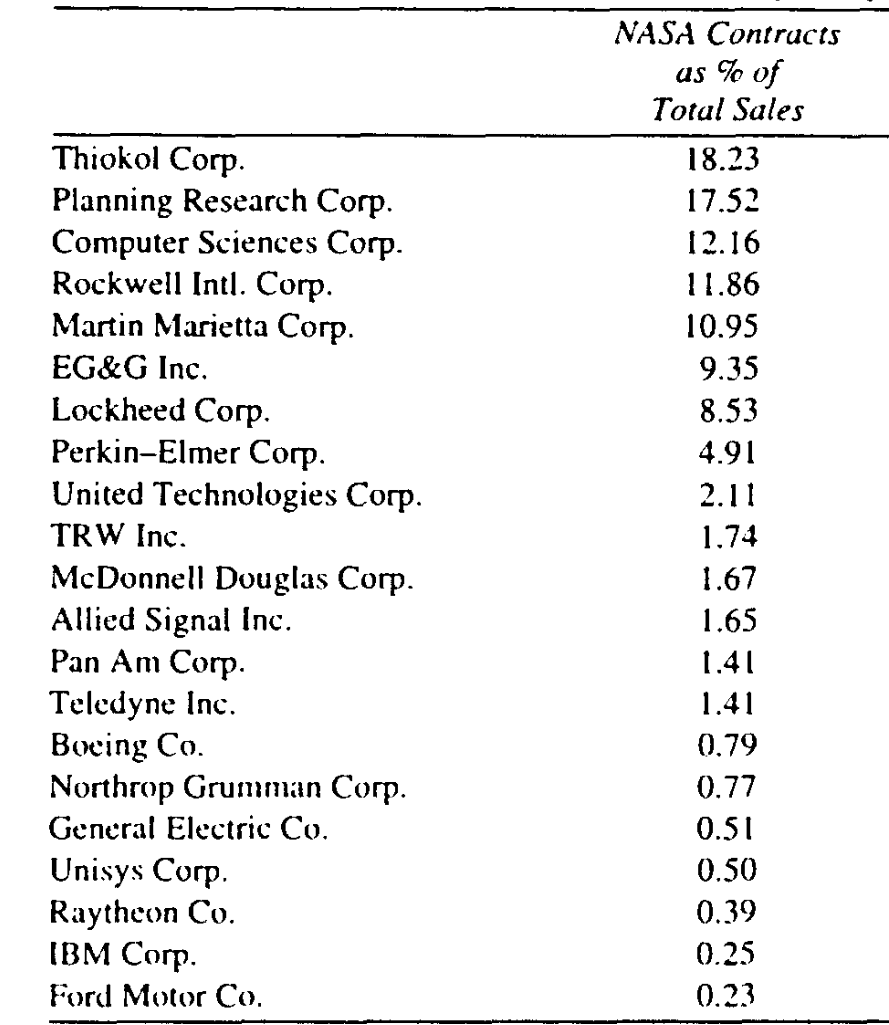 Rockwell ($8B market cap) had US aerospace, automotive, and industrial technology businesses; Lockheed ($2.5B) was an enormous defense contractor; Martin Marietta ($3B) held aerospace, defense, electronics, technology, aluminum, construction materials, and chemicals businesses. (Lockheed and Martin Marietta merged in 1995 to form the world’s largest defense contractor).
The smallest and least diversified entity was Morton Thiokol ($1.7B). It held Morton Salt, other chemical makers, and built rockets. They had the greatest exposure to the aerospace industry. NASA contracts as a percentage of Thiokol’s sales were over 18%; Rockwell was less than 12%; Martin Marietta was less than 11%; Lockheed was 8.5%. If any of these four companies had been found to be at fault, it would have been most impactful to Morton Thiokol. They were, as the New York Times reported, the company with “the most to lose in terms of profits” due to the disaster.
That probability is what the markets had determined — not which company was at fault.
~~~
Why are markets not freaking out? Because the highest probability case (for now) is that profits and revenues remain high, the economy stays robust, a Fed cut is forthcoming, and all of this noisy political stuff will ultimately work out in the end.
You can criticize market probabilities as a mash-up of wishful thinking and intelligent analysis. There are times, with the benefit of hindsight, when what looked like market madness was actually rational – if only we knew then what we know now. Hence, the probability machine is laying out various possible outcomes, along with prices that more or less reflect the likelihood of those outcomes accordingly.
The dispersion of outcomes includes a full range of possibilities. Sometimes, these are very different, even opposite, contradictory outcomes. There are times when markets appear to be failing to recognize specific risks. No doubt, there have been times when that was true. But we also need to accept that at other times, markets simply do not know.
Making probabilistic bets on very specific occasions involving people, policy, and politics is “squishy.” There is also a huge difference between assessing the likelihood of a White House takeover of the Fed, and understanding what its impact on prices will be in the future. We simply do not know…
~~~
For those of you who do want to explore the Fed independence issue, I direct your attention to Jon Hilsenrath’s August 8th commentary, “The Fourth Seat.” Jon spent 25 years at the WSJ as a reporter and editor, and for a long while, was the Journal’s primary Fed Whisperer.
He was early in explaining the mechanics of any White House power grab of the Fed:
“The President is presently lined up to have three sympathetic voices on the Fed’s seven-member board next year: Governors Chris Waller and Michelle Bowman, whom he appointed during his first term, and a third seat he’s now filling with Miran and later potentially by the new chairman.
It is a seven-member board. If Powell vacates his seat as a governor when his chairmanship ends next year, he is potentially handing Trump a decisive, highly disruptive vote on the Fed board.
With four votes, the Washington-based board has the authority to fire Fed regional bank presidents and reconstitute their boards of directors. Discord at the Fed is coming for the regional banks and this might be the mechanism.”
That is as good an explanation of the present circumstances as any you might read.
In the meantime, I am watching as Mr. Market tries to suss out the various possible and probable outcomes…
See also:
Why Aren’t Markets Freaking Out? (Paul Krugman, Aug 28, 2025)
Why the bond market remains so calm amid Trump’s Fed war. (Axios, Aug 28, 2025)
Why the Market Doesn’t Care Much About Trump Firing the Fed’s Cook (WSJ, Aug. 27, 2025)
Previously:
Might Tariffs Get “Overturned”? (July 31, 2025)
Maybe Mr. Market Is Rational After All (August 7, 2020)
Embrace Your Inner Statistician! (March 18, 2011)
The kinda-eventually-sorta-mostly-almost Efficient Market Theory (November 20, 2004)
Nobody Knows Anything (full archive)
__________
1. My full annotation:
“In the short run, the market is a probability machine, but in the long run, it is a data-multiplied-by-psychology machine.”
2. What are the probabilities that Tariffs get overturned? More on this coming next week…
