
Welcome to April! Kick off the month with my WFH reads:
• The oil market’s COVID moment: During the pandemic, demand for oil plummeted by about 7 million barrels a day. Gas prices plunged, and at one point oil prices went negative in the U.S. The Iran war is doing to oil markets what COVID did in 2020—creating a demand shock that could ripple through the global economy for years. If the oil shock plays out along those lines, it would mean the global economy has only just begun to feel the pain of the war’s impact. (Axios)
• Miami Is The New, New York: The population narrative is changing across the US. Florida’s domestic migration boom has ended, but Miami’s transformation into a financial and cultural capital is just getting started. The real question is whether the infrastructure can keep up. (Housing Notes) see also Where the U.S. Is Growing—and Shrinking—in Charts: The latest Census data reveals the broad effects of a big immigration slowdown and shifting domestic migration patterns. The Sun Belt boom is cooling, and the numbers tell the story. (Wall Street Journal)
• Helium Shortage Has Started Impacting Tech Supply Chains, Execs Say: The Middle East conflict is choking helium supplies, and the tech industry is feeling it. Semiconductors need helium, and there’s no substitute. (Reuters)
• The Difference Between California-Produced Gas And The Other 49 States: California’s gas prices have been noticeably higher for decades, and it’s not just geography. Unique refining requirements and regulatory costs make the Golden State’s pump prices a category of their own. (Jalopnik)
• Three Rules for AI in Finance: Why I’m teaching a new course on AI in Finance. (Arpitrage)
• The Power Brokers Behind the $250 Billion Influencer Economy: The most sought-after talents today have millions of followers who will buy anything they endorse. These agents and managers make sure they get what they’re worth. (Wall Street Journal)
• Gulf allies privately make the case to Trump to keep fighting until Iran is decisively defeated: Saudi Arabia and the UAE are quietly pushing Trump to finish what he started. Their message: half-measures in Iran will leave the region more dangerous, not less. (Associated Press)
• MoMA’s Former Director on How to Handle Artists and Billionaires: Glenn Lowry reflects on decades running MoMA—navigating artist egos, billionaire donors, the politics of institutional art, the power of stress, why museums should never issue statements and whether art should be considered an asset class A master class in cultural diplomacy. (Wall Street Journal)
• The First Post-Reality Political Campaign: Viktor Orbán is waging cognitive warfare on a new scale. Anne Applebaum examines Hungary’s use of AI-generated deepfakes in political campaigns. When voters can’t distinguish real from fake, democracy has a serious problem. (The Atlantic)
• The Trip to the Far Side of the Moon: As soon as April 1, four astronauts will embark on the farthest human journey from Earth ever attempted. Artemis is real, and the countdown is on. (Wired) see also Inside NASA’s Artemis II Mission to the Moon and Back: Bloomberg goes inside the Artemis II mission—NASA’s first crewed lunar flight in over 50 years. The engineering is extraordinary; the politics of funding it are even more so. (Bloomberg)
Be sure to check out our Masters in Business next week with Judd Kessler, the Howard Marks Endowed Professor at the Wharton School of the University of Pennsylvania. The winner of the Vernon L. Smith Ascending Scholar Prize,he is the author of is Lucky by Design The Hidden Economics You Need to Get More of What You Want.
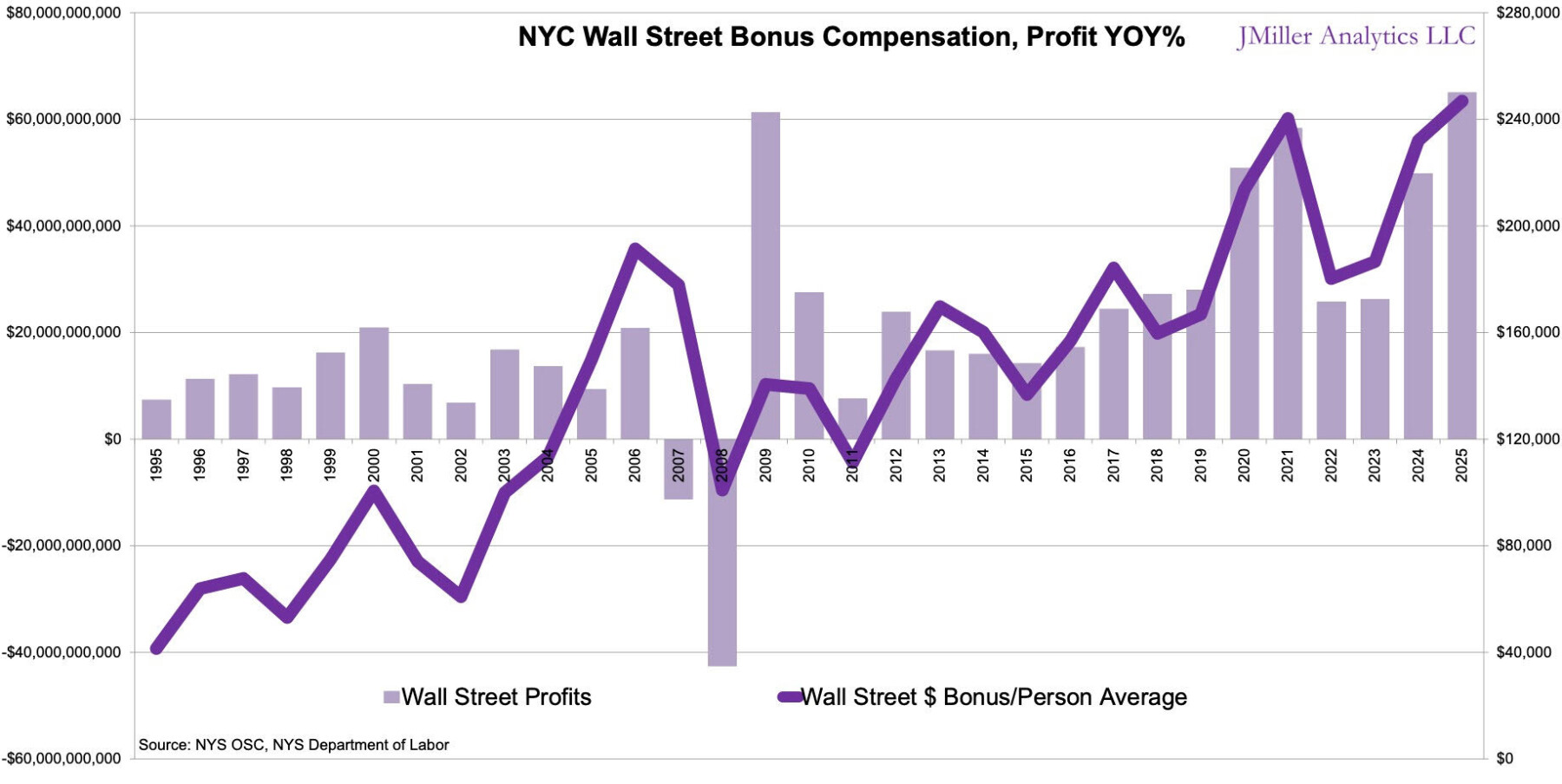
Wall Street Bonus: 2025 numbers are in and they are big.
Source: Housing Notes
Sign up for our reads-only mailing list here.
