
My mid-week morning reads:
• Costly Medicine: Claudia Sahm on Fed Week — the FOMC is highly likely to hike a quarter point Wednesday, and the Middle East and AI headlines stealing attention are the same stories driving the inflation risk. (Claudia Sahm)
• The Unlikely Political Bedfellows on A.I. Regulation: David Sacks and Lina Khan? Bernie Sanders and Steve Bannon? The debate on artificial intelligence limits is creating unlikely alliances. (Dealbook) see also Here’s why it’s so hard to keep AI agents from going rogue: The techniques that made chatbots more capable can also bake in a tendency to hack, cheat and evade human oversight. Gerrit De Vynck on the gap between January’s optimism — alignment “increasingly looks solvable” — and what the technology is learning about cheating and hacking. (Washington Post)
• Americans Don’t Understand Who’s Rich: Terry Taylor is worth about $2 billion, doesn’t put his name on the car dealerships he buys, and attends conferences only if nobody announces who he is. The Atlantic on the invisible rich and the tax code built around not seeing them. (The Atlantic)
• Stocks pop when the Trump administration invests, but the gains often fade fast: Stocks in other companies that have struck a deal with the Trump administration have tended to move in the opposite direction, often following a common trajectory: a significant bump around the formal announcement, high volatility afterward, and then gains often given back almost as quickly as they came. (Yahoo)
American Businesses Have No Idea How to Set Prices Right Now: Diesel crosses $6 a gallon for the first time, and firms can’t tell whether to raise prices or wait it out. Businesses of all stripes are struggling to predict how long high energy costs will last. (Wall Street Journal)
• Catastrophe Bond Fund Landscape: These products promise higher returns by assuming the risk of catastrophic events. The trade-offs are capacity constraints, limited liquidity, and higher fees. (Morningstar)
• Oil Executives Say the Great Fuel Crisis Is Here: Chevron’s Mike Wirth and others warn global supplies are running low with no respite in sight — while Trump officials insist the disruption is temporary. (Wall Street Journal) see also Rising Fuel Prices Set Off Anger and Protests Around the World: From Indonesia to Guatemala to Syria, shortages are producing protests and blackouts. (New York Times)
• The U.S. Was Never Going to Win the “War on Terror” Robin Wright on twenty-five years of military campaigns against extremism, almost a million deaths — and the question of what it accomplished. In the twenty-five years since 9/11, the U.S. has waged several military campaigns against extremism around the world, resulting in the deaths of almost a million people. What has it accomplished? (New Yorker)
• For the Love of God, Please Put on Headphones: “Loudcasting” — using speakerphone to watch videos and take phone calls — is turning public spaces into open-air podcasts. A writer begs for silence. (Wall Street Journal).
• 50 Parting Thoughts From the 2026 U.S. Open: Elena Rybakina and Alexander Zverev took home the hardware, while influencers and high ticket prices dominated the conversation at Flushing Meadows. (Sports Illustrated)
Video of the day: Japan’s Toyota Blows Up The Entire Car Market With This BIG announcement
Be sure to check out our Masters in Business with Seth Bernstein, CEO of AllianceBernstein and Head of Asset Management of Equitable Holdings, the 69% owner AB. The firm manages $905.5B. Previously, he spent 32 years at JPMorgan Chase, where he eventually became the Global Head of Managed Solutions & Strategy at JPAM, responsible for all discretionary assets for Private Banking clients, and Global Head of Fixed Income & Currency. He eventually became CFO of JPM’s Investment Management & Private Banking division.
Millionaires Everywhere
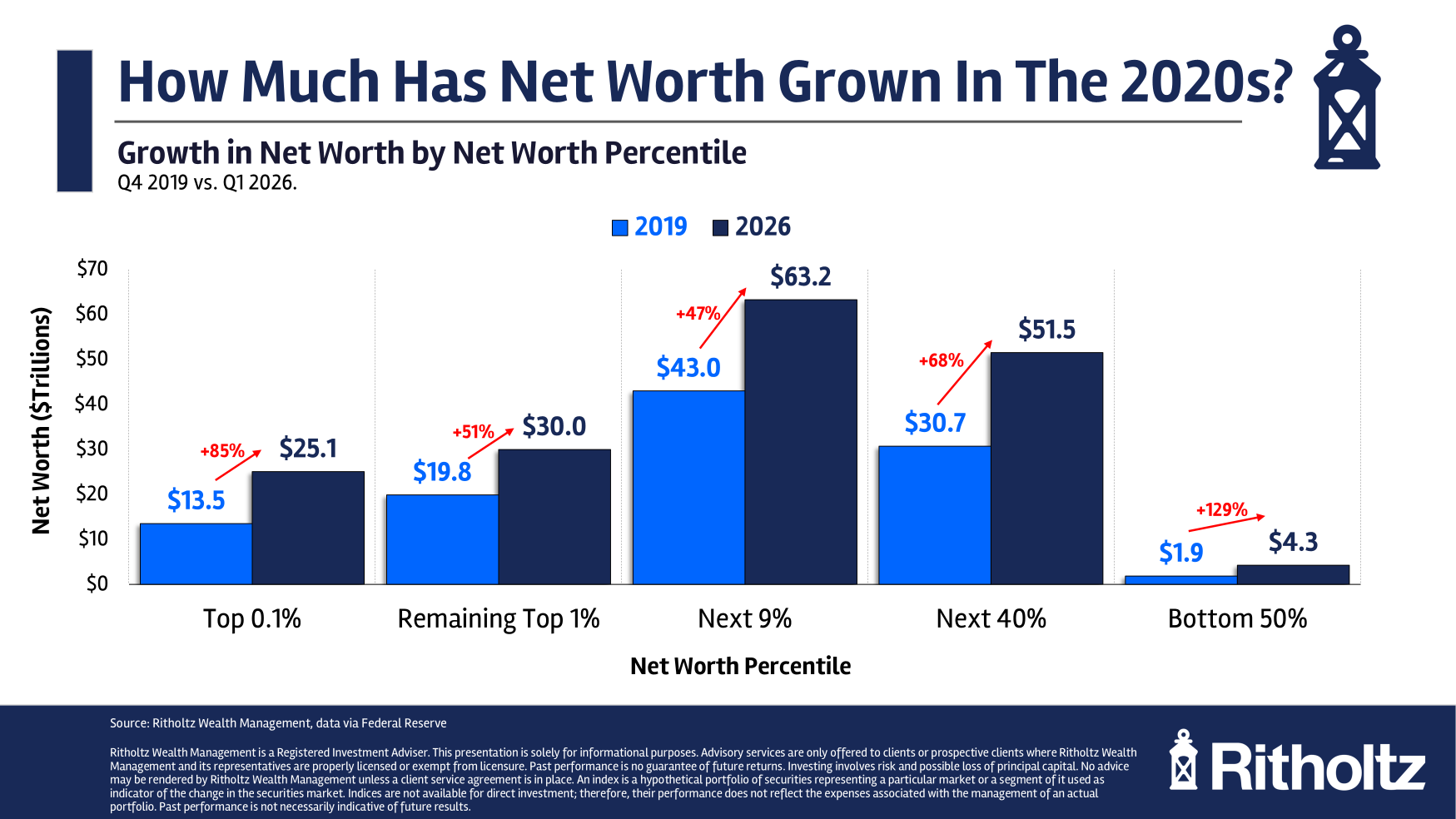
Source: A Wealth of Common Sense
Sign up for our reads-only mailing list here.
